

Your Body Is Crying for Help. Are You Listening?

Your body doesn’t whisper; it cries. Many of us miss the signs. Headaches that linger, gut issues that won’t resolve, racing thoughts, restless sleep, skin flare-ups, neck and upper back tension, sugar cravings, or a pounding heart. From the moment you wake up to the moment you crash into bed, your body is responding to dozens of stressors: morning alarms, packed schedules, traffic, bills, deadlines, and the never-ending to-do list.
Not all stress is bad, though.
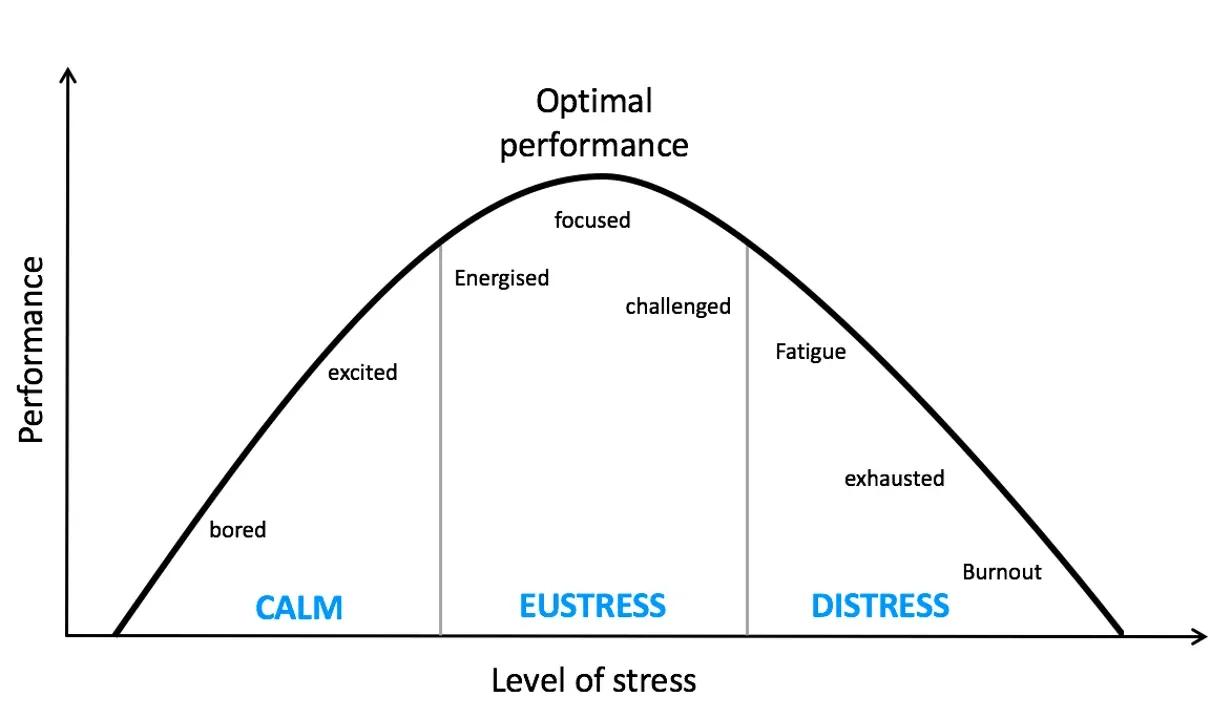
Some stress actually helps us grow. The kind that keeps you motivated, sharp, and excited to take on new challenges is called eustress. It acts like a healthy workout for your nervous system, just enough pressure to build strength without causing harm. It pushes you out of your comfort zone and helps you develop skills, confidence, and resilience.
The real concern is the other kind. The one that leaves you drained, irritable, on edge, and eventually burned out. This is known as distress. When it builds up over time, it overwhelms your body’s survival systems and slowly chips away at your well-being.
Fight, Flight, or Freeze
Our stress response evolved to keep us alive. Imagine you’re being chased by a bear. Your body immediately jumps into “fight or flight” mode. Your heart races, blood pumps to your muscles, and your brain becomes focused on one thing: SURVIVAL!

However, these days, we’re not running from bears, but our body reacts the same way to emails, traffic, social media, financial pressure, or feeling overwhelmed. Sometimes it’s as simple as frantically searching for your phone while you’re literally on the phone or realizing it’s been in your pocket the whole time. Your heart races, your brain panics, and your body still treats it like a life or death situation. It has become a case of less dangerous situations but with frequent sensory overload.
Over time, this constant activation of the fight-or-flight system wears us down, and you might notice:
You get angry or irritable more easily
You feel anxious or panicky, even over small things
You’re constantly on edge or overthinking
You feel hyperaware of everything around you
You’re always on your toes and your tone changes
Eventually, this leads to the FREEZE response. Your nervous system starts to shut down. You might feel dissociated, emotionally numb, forgetful, or like you’re just “going through the motions but not really living in your body.” This is your body’s way of conserving energy after being in overdrive for too long.
Hormones are at the Heart of It All
Your body doesn’t just feel stress. It processes it through hormones. Two main systems are involved:
SAM (Sympathetic-Adrenal-Medullary) system is responsible for short-term stress and adrenaline
HPA Axis (Hypothalamic-Pituitary-Adrenal) system manages long-term stress and cortisol

Cortisol is your main stress hormone but it’s also your wake up hormone. In small doses, it helps you stay alert, and respond to challenges. When cortisol stays elevated for too long, it starts to throw everything off balance.
Wired but Tired: The Stress-Sleep Cycle

One of the most common things I hear from patients is:
“I’m exhausted, but I just can’t fall asleep!”
That’s because cortisol and melatonin, the hormones that regulate your sleep-wake cycle, can get out of sync. Cortisol should be highest between 6 and 8 AM to help you feel alert, and melatonin should rise between 9 and 11 PM to help you wind down.
If your cortisol is still high at night, it competes with melatonin and keeps your brain active. This leads to trouble falling asleep, waking up in the middle of the night, or feeling tired even after a full night of rest.
How Stress Affects Your Body, System by System
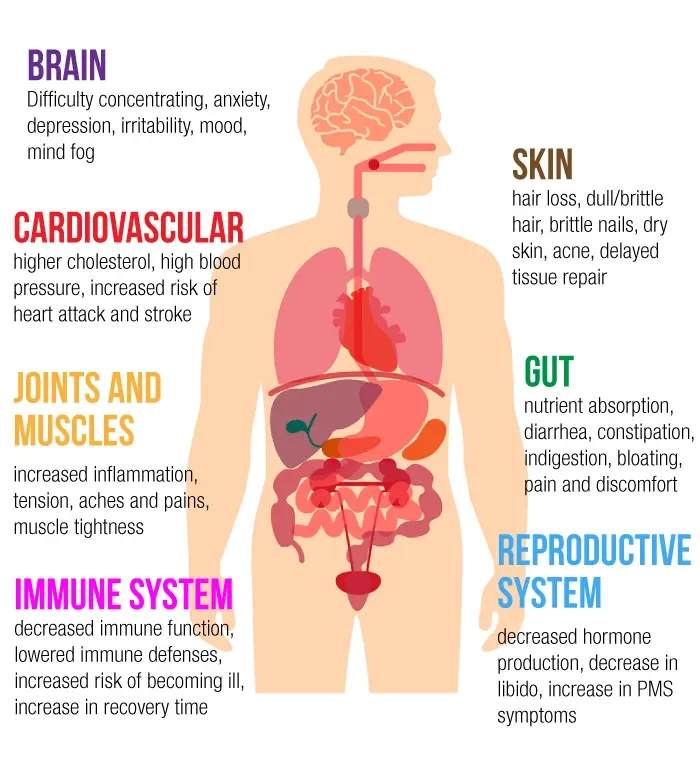
Stress doesn’t just affect your mood. It impacts every major system in your body. Here’s how:
Cardiovascular System
Stress increases your heart rate and blood pressure. Chronic stress can lead to inflammation, poor circulation, and higher risk of heart disease and stroke.
Respiratory System
When stressed, you may notice rapid, shallow breathing or shortness of breath, especially when speaking. Stress can worsen asthma, anxiety, and breathing-related symptoms.
Digestive System
Stress affects your gut bacteria, slows digestion, and increases inflammation. This can lead to bloating, constipation, diarrhea, or IBS flare-ups. It also promotes the hunger hormone, Ghrelin, which can cause you to have more cravings, overeat, and have difficulty losing weight.
Musculoskeletal System
Tension builds in your shoulders, neck, jaw, and back. Over time, this contributes to headaches, pain, and even conditions like fibromyalgia.
Immune System
Stress weakens your immune system, making you more vulnerable to colds, flus, delayed healing, and inflammatory conditions.
Reproductive System
In women, stress may lead to irregular periods, worsened PMS, and fertility issues. In men, it may reduce testosterone and lower libido. Cortisol draws resources away from your reproductive hormones, affecting balance and energy in both sexes.

Signs You Might Be Stuck in a Stress Loop
You feel constantly overwhelmed or “always on”
Your sleep is poor or unrefreshing
You rely on caffeine or sugar to get through the day
Your digestion is unpredictable
You get frequent headaches or muscle tension
You feel detached or unmotivated
You struggle with memory or focus
What Can You Do About It
The goal isn’t to eliminate stress entirely. It’s about creating flexibility in your nervous system so you can shift between alert and relaxed states in a healthy way. This is called nervous system resilience, and it’s something we can all train over time.
Here are a few simple ways to support your stress recovery:
Practice slow breathing for 1 to 2 minutes a few times a day
Get natural daylight in the morning to reset your cortisol rhythm
Eat protein-rich meals with healthy fats to keep blood sugar stable
Practice the 4Ds of Stress listed below to limit how much stress you take on
Move your body daily, even if it’s just a walk or gentle stretching
Create a consistent evening routine that helps you wind down
Consider support like magnesium glycinate or calming herbal teas (if recommended by your Naturopath)
Talk to someone. Social connection is powerful for stress regulation

Stress Is Not Just in Your Head
Stress is a full-body experience. It’s not something you can just push through, doing so often makes things worse, leading to burnout, depression, and a growing sense of helplessness.
In my practice, I work closely with each patient to identify the specific stressors in their life and limit their impact. Through detailed intake and bloodwork, we uncover nutrient deficiencies, inflammation, and digestive imbalances that may be silently draining your resilience. From there, we focus on optimizing gut health so your body can absorb the nutrients it needs, and we improve both sleep quality and quantity, so you wake up feeling rested, not wrecked. All of this is done using natural treatments.
I will guide you in breaking the vicious cycle, not push harder inside it. Too often, people think they’re not trying hard enough, when in reality they’re running on empty. It’s like turning a key in a car that won’t start, the problem isn’t effort, it’s fuel.

Want to break the cycle?
Book a free 15-minute phone consultation to learn how naturopathic care can help you (Ontario residents only)
