

Holistic Health: Why More People Are Choosing a Holistic Approach to Care
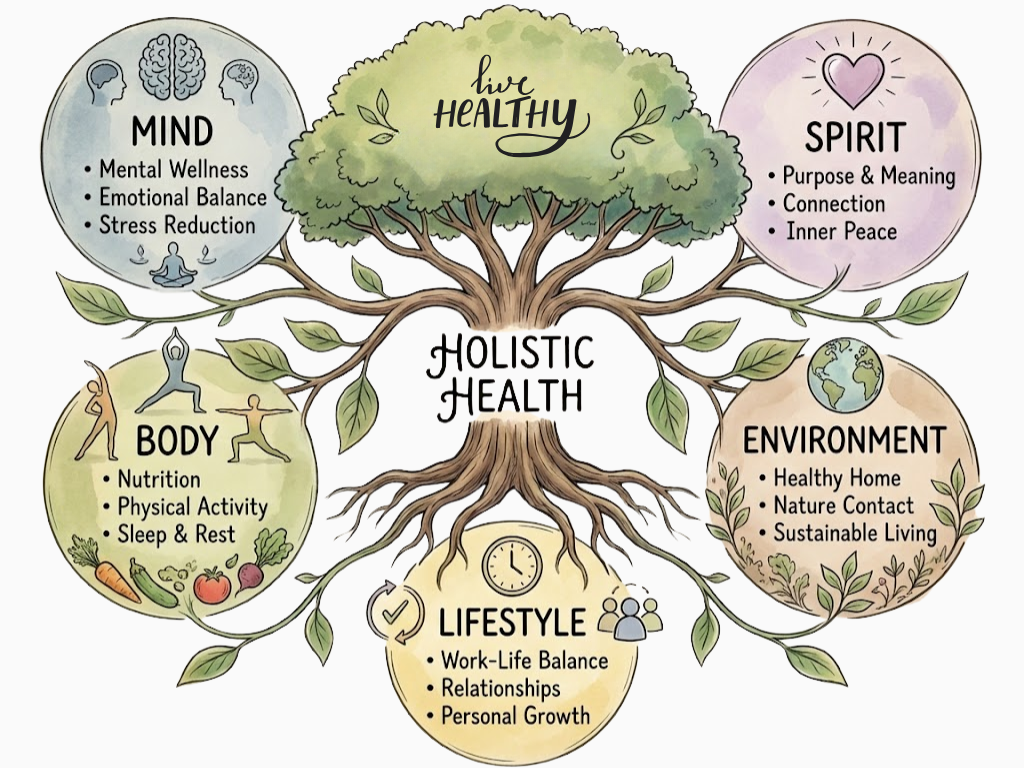
Searches for “holistic health”, “holistic medicine”, and “holistic wellness” continue to rise as more people realize that managing symptoms alone is not enough. Many are looking for a holistic approach that addresses how different systems in the body are connected.
Holistic health focuses on the whole person, not just a diagnosis.
But First, What Does Holistic Health Really Mean?
Holistic health means understanding that the body does not work in isolated parts. Digestion, hormones, sleep, mental health, immune function, and cardiovascular health all influence one another.
Rather than asking only “What symptom is present?”, a holistic health approach asks:
Why did this start?
What systems are involved?
What lifestyle or biological factors are contributing to it?
This perspective allows care to be more personalized and preventative.
Holistic Medicine Is Still Evidence-Informed
A common misconception is that holistic medicine is unscientific. In reality, holistic care, when practiced in a true integrative (not-alternative) manner, is grounded in:
Clinical research
Laboratory testing
Nutrition and lifestyle science
Individualized risk assessment
Holistic medicine does not reject conventional medicine. It works alongside it, helping patients optimize health while respecting medical diagnoses and treatments.
Why Patients Are Turning to Holistic Wellness
Many people seek holistic wellness after feeling rushed through short appointments or told their symptoms are “normal.”
As such, holistic care is often helpful for concerns such as:
Chronic fatigue and low energy
Digestive issues and bloating
Stress, burnout, and poor sleep
Hormonal changes
Weight and metabolic concerns
Instead of layering temporary band-aid fixes, holistic care focuses on restoring balance across systems, often guided by actual data (e.g. bloodwork).
The Role of a Holistic Doctor
A licensed holistic or naturopathic doctor takes time to understand:
Diet and nutritional status
Stress and nervous system health
Sleep patterns
Movement and recovery
Environmental and lifestyle factors
Appointments are typically longer and education-focused, empowering patients to understand their health rather than depend on quick solutions.
Holistic Health Is Preventive by Design
One of the biggest benefits of a holistic approach is prevention.
By addressing imbalances early, holistic care aims to:
Reduce long-term disease risk
Improve resilience and energy
Support healthy aging
Prevent symptom progression
This approach supports long-term wellness rather than crisis management.
Choosing a Qualified Holistic Practitioner
In Ontario, holistic care should always be delivered by a regulated professional. A licensed naturopathic doctor must meet strict educational and licensing standards and be registered with the College of Naturopaths of Ontario (CONO).
This ensures care is delivered ethically, within scope, and with patient safety as the priority.
Holistic Health Is About Connection, Not Complexity
At its core, holistic health is about reconnecting the dots. When diet, sleep, stress, and lifestyle are aligned, the body often functions better as a whole.
Holistic wellness is not about doing everything at once. It is about making intentional, sustainable changes that support the body over time.
Dr. Yehia Al-Hashmi is a licensed Naturopathic Doctor in Ontario, registered and in good standing with CONO. His holistic approach focuses on root causes, patient education, and practical, evidence-informed strategies.
If you’re interested in a holistic approach to your health, you can book a free 15-minute phone consultation using the link below to learn how this style of care may support your goals.
